Standing Strong: Understanding the Impact of Pain on America's Workforce
For many Americans working in physically demanding jobs, pain has become part of the workday. But pain shouldn’t be accepted as simply part of the job.
Whether teaching in a classroom, responding to emergencies, serving customers, working in retail or performing physically demanding labor, many workers spend hours on their feet every day. Over time, that physical strain can contribute to orthopedic pain that affects far more than the ability to get through a shift. It can impact careers, relationships and overall quality of life.
To better understand how orthopedic pain affects America’s workforce, Pacira launched Standing Strong, a national survey conducted by Wakefield Research of 1,000 full-time U.S. workers in physically demanding professions. The findings reveal that pain has become increasingly normalized among this group and that many workers are looking for better ways to manage it.
Pain has become part of the job
The Standing Strong survey found that 85% of workers experience pain at work at least sometimes, while more than 4 in 10 report experiencing pain often or all the time.
Yet despite how common pain has become, many workers don’t talk about it.
For many people, pain has become something they simply expect to live with. But it doesn’t have to be.
say they typically push through pain rather than ask for help
working through pain without telling a supervisor, manager, or colleague
Pain doesn’t stay at work
The effects of pain can reach far beyond the workplace.
According to the Standing Strong survey:
reported losing income because of pain-related missed shifts or reduced hours
said pain had prevented them from pursuing opportunities that could advance their careers
Pain also affects life outside of work. Many respondents said ongoing pain negatively impacts their relationships, social lives and ability to stay active, underscoring the need to address pain before it interferes with daily life.
Why knee pain stands out
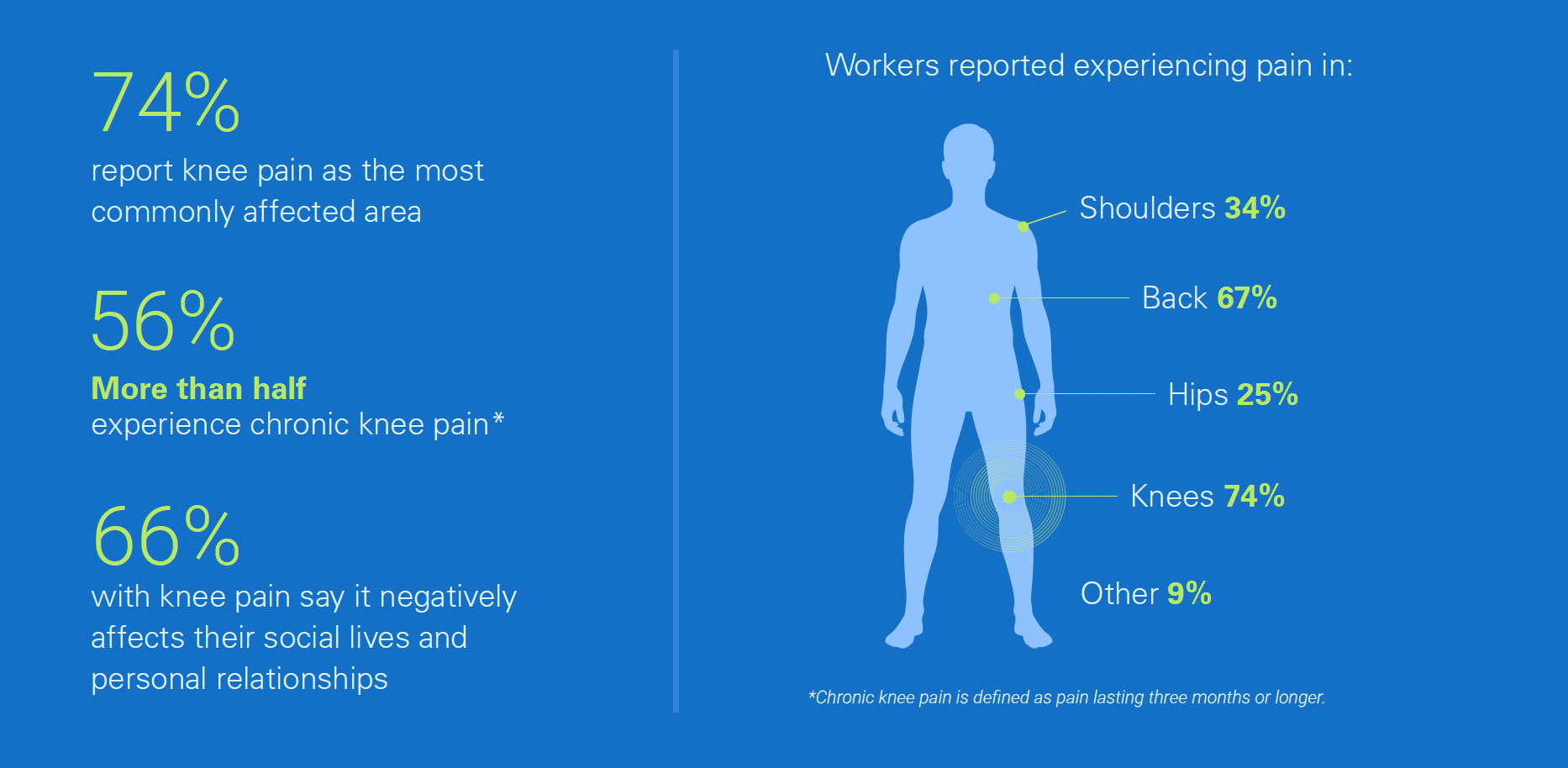
While workers reported pain affecting multiple areas of the body, including the back, shoulders and hips, one area stood out above the rest: the knees.
Among workers experiencing orthopedic pain, 74% reported knee pain as the most commonly affected area, while more than half (56%) reported living with chronic knee pain, defined as pain lasting three months or longer.
Of the workers aged 45 years and older surveyed, 28% reported chronic knee pain. Early conversations with a healthcare provider can help identify the cause of pain and determine an individualized treatment plan that supports mobility, physical function and quality of life. There are treatment options available that may help appropriate patients manage knee osteoarthritis (OA) and stay active. Learn more about one treatment option that may be right for you.
Workers are interested in non-opioid pain management options
The survey also found a clear gap between how workers currently manage pain and what they want from pain management, which includes a clear interest in long-lasting, non-opioid options.
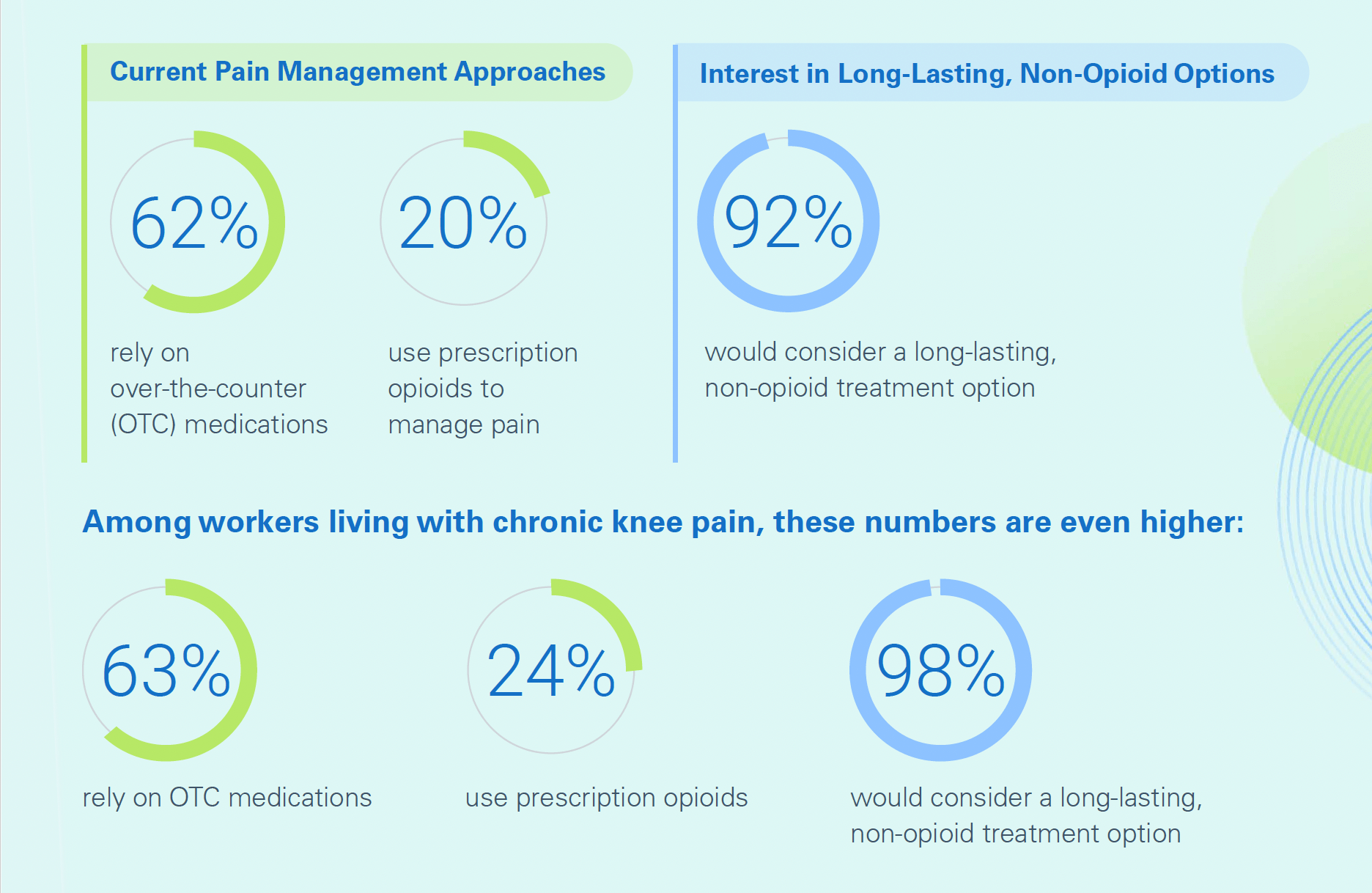
While 62% of respondents reported relying on over-the-counter (OTC) medications to manage pain, 20% said they currently use prescription opioids. Yet despite relying on these approaches, 92% said they would consider a long-lasting, non-opioid treatment option if it provided meaningful pain relief. Among respondents living with chronic knee pain, that number increased to 98%.
Pain management isn’t one-size-fits-all. The right treatment depends on the cause of pain, a person’s overall health and their individual goals. Having an open conversation with a healthcare provider can help patients better understand the options available and develop a treatment plan that’s right for them.
Want to learn more?
Pain may be common, but it doesn’t have to define your work or your life. If orthopedic pain or chronic knee pain is making it harder to stay active, perform your job or enjoy everyday activities, talk with a healthcare provider about what’s causing your pain and the treatment options available.
Explore the Standing Strong findings to better understand how orthopedic pain affects America’s workforce.